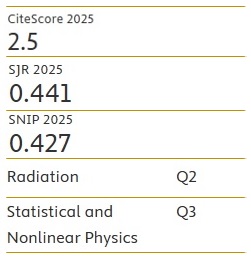
Advanced Physical Research
Advanced Physical Research is an open access Journal, publishing fully peer-reviewed original and review papers as well as brief reports on topics in all areas of theoretical and applied physics. The journal provides a platform for researchers who wish to summarize a field of physics research and share this work as widely as possible. The published papers provide an overview of the main developments on a particular topic, with an emphasis on recent developments, and sketch an outlook on future developments.
Structural, Mechanical and Thermal Properties of Epoxy Composites Reinforced with Chemically Precipitated MgO Nanoparticles
- Published: 12-10-2026
Share
Epoxy resins are widely used engineering polymers, but their brittleness and low thermal conductivity restrict their use under combined mechanical and thermal loading. This work examines how magnesium oxide (MgO) nanoparticles prepared by chemical precipitation modify the structure and the mechanical and thermal behavior of an epoxy matrix. MgO was synthesized from magnesium nitrate hexahydrate, precipitated at pH~12, dried and calcined at 6000C, and then incorporated into the epoxy at 0, 3, 5, 7, 9 and 11~wt.% by gradual addition during mechanical stirring at 500 rpm for 20 min. The composites were characterized by X-ray diffraction (XRD), scanning electron microscopy with energy-dispersive X-ray spectroscopy (SEM-EDX), Shore D hardness, Charpy impact strength, tensile strength and Lee's disc thermal conductivity. XRD showed a cubic rock-salt MgO phase with a crystallite size of 13.0-15.3 nm, and no additional crystalline phases were detected after incorporation into the epoxy. Shore D hardness increased monotonically from 80.00 to 89.56 and thermal conductivity from 0.21 to 0.38 W m-1K-1, both reaching their highest values at 11~wt.%. Impact strength and tensile strength instead passed through a maximum at 7 wt. %, at 13.00 kJ m-2 and 72 MPa respectively, and decreased at higher loadings, indicating that 7~wt. % gives the best overall mechanical balance in this system.


- View 22
- Downloads 7
- Saveds 0
- Citations (Crossref) 0